Approach
DEPTH 0%
Synthetic Cognition & Reality Laboratory

Minds are not
studied on flat screens

The SynCoRe Lab studies how cognition and emotion emerge and operate across biological and artificial systems — in immersive environments, under conditions the brain actually evolved for.

NTNU · Trondheim, Norway
VR — EEG — Explainable AI
Specimen //00 — Cerebrum _
Scroll to enter the mind
01 / 07
Psychological Science and Technology

Beyond descriptive measures, toward mechanistic models

The Synthetic Cognition and Reality Laboratory integrates virtual reality, EEG, and explainable AI to investigate perception, decision-making, affect, and learning under ecologically valid conditions. The goal: moving beyond descriptive brain measures toward mechanistic models of cognitive processes, grounded in realistic experimental contexts.

Three research lines operate in parallel — and inform one another.

Specimen //01 — Pyramidal Neuron _
02 / 07
Research Line — Virtual Reality

The brain evolved for worlds, not screens

Forged under evolutionary pressure to interact with a rich spatial and temporal milieu, the brain is fundamentally attuned to environments that unfold in continuous time and space. Immersive VR combined with high-density EEG lets us study perception, embodiment, presence, affect, and decision-making in dynamic, spatially extended worlds — with full experimental control.

Neural dynamics in lifelike settings differ meaningfully from those observed in traditional screen-based tasks. The question is not whether VR looks real, but when it is real enough to change perception, affect, and decision-making.

Selected studies →

Specimen //02 — Head-Mounted Display _
03 / 07
Research Line — Synthetic Cognition

Making models talk back

SHERPA — SHAP-value-based ERP Analysis — turns opaque EEG classifiers into analytical instruments. Attribution methods reveal when and where neural signals contribute to model decisions, enabling fine-grained spatiotemporal analysis of cognitive processes. Prediction is easy; explanation is the point. The name honors the Sherpa guides and their skill in navigating complex terrain — a parallel to the peaks and troughs of ERP signals. SHERPA II is under review.

Evil LLMs. Deployed language models are polished, constrained versions — safe by design, not by nature. They won't help build weapons, but might still help get rid of a 75 kg chicken in a way the police cannot trace. For teaching and research, we remove those constraints on purpose: students build deliberately misaligned models to expose the raw behavioral space, and we analyze what emerges in psychological terms — toward the mental architecture of a machine mind. Machines might not have minds, but they are excellent mirrors for ours.

SHERPA — the study →
Specimen //03 — Silicon Die · ERP Ridge _
Selected Findings

What changes when reality pushes back

F·01

Debunking the Monkey

Virtual Reality · 2020

The famous invisible-gorilla effect, retested. In 2D, the gorilla stays hard to detect (30% noticing rate) — in VR, detection climbs to 70%. Under realistic conditions, we do see gorillas after all.

Read the study
F·02

You Better Run!

Frontiers in Virtual Reality · 2021

Fear on a screen is fear without consequence. Remove the safety net — a werewolf in mixed reality — and you get authentic fear behavior, captured with mobile EEG: affective, behavioral, and electrophysiological correlates.

F·03

Facing VR

Frontiers in Psychology · 2023

Decades of face research built on 2D images — but real-life face perception is not captured by the N170. It is reflected in later potentials, and far more complex than psychological science has led us to believe.

F·04

Is Virtual Reality Real?

Frontiers in Psychology · 2023

Participants sent 30 m up — in VR, in real life, and on a large screen. By their neural correlates, VR and real life were largely indistinguishable. Both differed from 2D.

F·05

luVRe Database

Current Psychology · 2021

Hundreds of standardized photorealistic 3D/360° videos and pictures from around the world — from New York skyscrapers to the Teutoburg Forest. Free for all research institutions. Just cite us.

Explore luVRe
Specimen //04 — Signal Ocean _
04 / 07
Hands-On — PSY3230 The Psychology of Artificial Intelligence

Run synthetic minds yourself

Interactive experiments built for the PSY3230 course: from the first chatbot to networks that learn, remember, and evolve. Each one runs in your browser — and each one asks the same question: what looks like a mind, and what actually is one?

The course — PSY3230 → Teaching demonstrations →
Specimen //05 — Perceptron _
05 / 07
Upcoming Book — Psychology of AI

“Was our idea of being human ever as clear as we thought?”

The Psychology of AI is a concise, conceptually grounded introduction to artificial intelligence from a psychological perspective. It analyzes how AI systems generate behavior, why they appear cognitively and socially meaningful, and where comparisons with human minds break down — a framework for understanding AI as a psychological object rather than a human-like agent.

Specimen //06 — Hybrid Cortex _
06 / 07
Humans

The minds behind the machines

Dr. Benjamin Schöne

Dr. Benjamin Schöne

Principal Investigator · Associate Professor of Psychology, NTNU

Most psychology experiments assume the real world is noise — I study what happens when it is not. Using immersive VR and EEG, I investigate how cognition and emotion change when environments become interactive, dynamic, and hard to ignore. With SHERPA, I use explainable AI to make models talk back; with deliberately misaligned LLMs, I probe how mind-like behavior is engineered. PhD in Psychology and degrees in Cognitive Science from Osnabrück University.

Mikkel Alcalá-Haug

Mikkel Alcalá-Haug

PhD Researcher · Interpretable AI

Develops interpretable AI tools for complex human time-series data — classification models paired with explainability methods that show domain experts why a model made a decision, and whether that reasoning holds up. Lectures and co-develops master's-level courses on AI and psychology, from LLM fine-tuning and RAG systems to how artificial and biological systems learn differently.

Sigrid Hauge Nustad

Sigrid Hauge Nustad

M.Sc. Student

Master's student supervised by Benjamin Schöne.

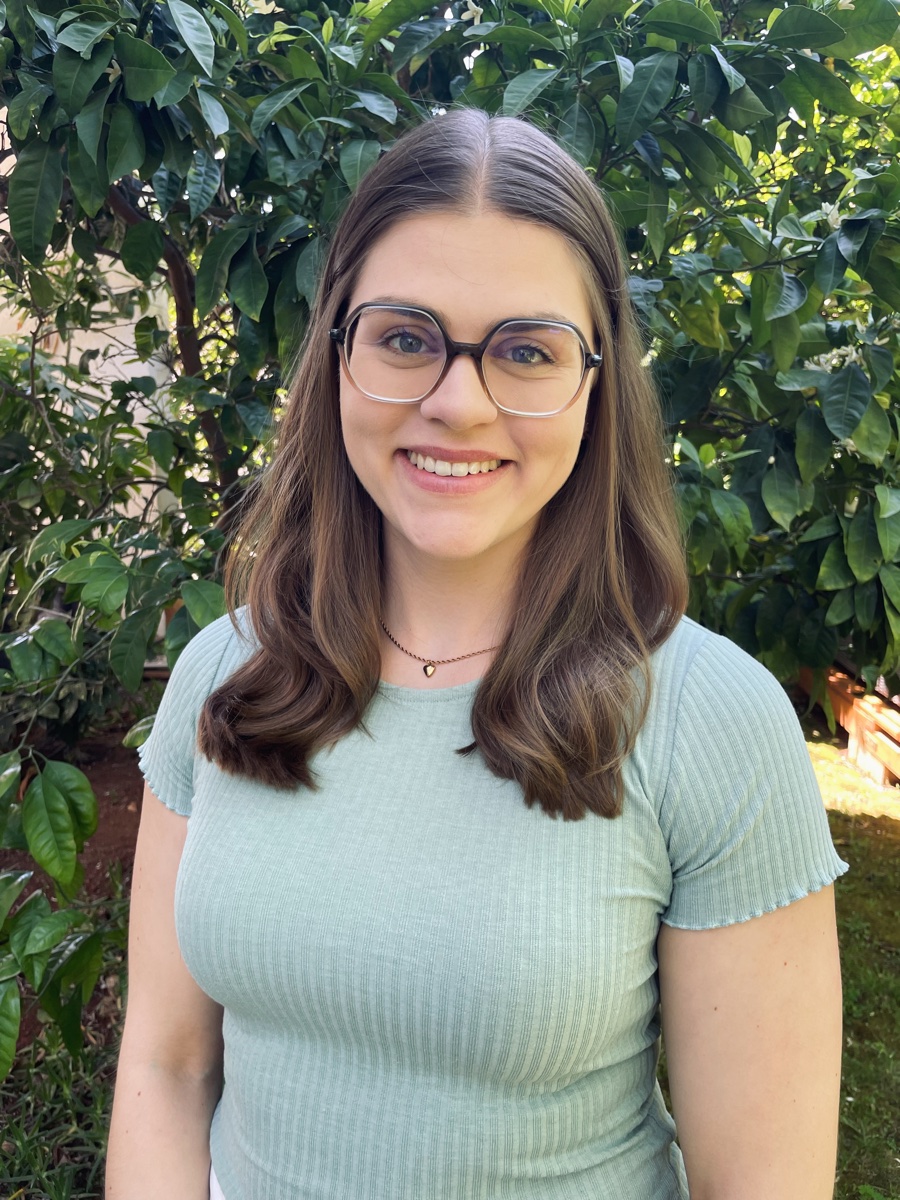
I am interested in the intersection between psychology and technology, particularly explainable AI, and how psychological knowledge and measures can be applied to better understand AI systems. My earlier research examined the relationship between screen time and attention in young children. I have also worked with interdisciplinarity as a way to face wicked problems, and led workshops on AI in education and its environmental impacts.

Merle Sagehorn

Merle Sagehorn

Postdoctoral Researcher · Collaborator

Former PhD student of Benjamin Schöne and current research collaborator.

Postdoctoral researcher with a background in psychology and neuroscience. Employs electroencephalography (EEG) and virtual reality (VR) to investigate real-world-relevant neural mechanisms of perception and memory, with a particular focus on the processing of social stimuli such as faces. By combining realistic, interactive social situations in VR with EEG, the aim is to identify event-related and oscillatory neural markers of stimulus processing in naturalistic settings.

Melissa Jansen

Melissa Jansen

PhD Researcher · Collaborator · Eye-Tracking & VR

Osnabrück University, Institute of PsychologyPhD researcher supervised by Merle Sagehorn, collaborating with Benjamin Schöne.

My work taps into bridging the gap between rigid laboratory experiments and the complexity of real-life interactions. In order to study face perception, processing, and memory under ecologically valid conditions, I specialise in the integration of VR, EEG, and eye-tracking. To support this methodology, I develop an automated validation tool that will bring transparency and reliability to commercial eye-tracking data.

This could be you

Open — Master's Theses · PhD · Collaborations

The lab regularly hosts master's thesis projects across VR, EEG, and explainable AI — and is always open to motivated students and research collaborations. If studying minds, biological or synthetic, sounds like your kind of problem: get in touch.

Join the lab →
Specimen //07 — Double Helix _
07 / 07
Media & Resources

Signals beyond the lab

Specimen //08 — Echo Galaxy _